

AI assistants name brands they can identify with confidence. If the web describes your company five slightly different ways, an assistant tends to hedge or leave you out. Entity SEO for AI search means making every source, starting with your own site, tell the same clear story about who you are.
What an entity is
An entity is something that can be identified without ambiguity: a company, a person, a product, a place. “Acme Ledger, accounting software for small agencies, founded in Bengaluru in 2019” is an entity. “Acme” on its own is not.
AI systems connect facts to entities. When the facts line up across sources, the system can place you in the right answers. When they conflict, it can’t tell which version is true.
Signs you have an entity problem
- Ask ChatGPT or Gemini “What is [your brand]?” and the answer is vague, outdated or wrong.
- Your old product name, former founder or previous pricing still appears in answers.
- You’re described in the wrong category, or confused with a similarly named company.
Step 1: Write the canonical facts
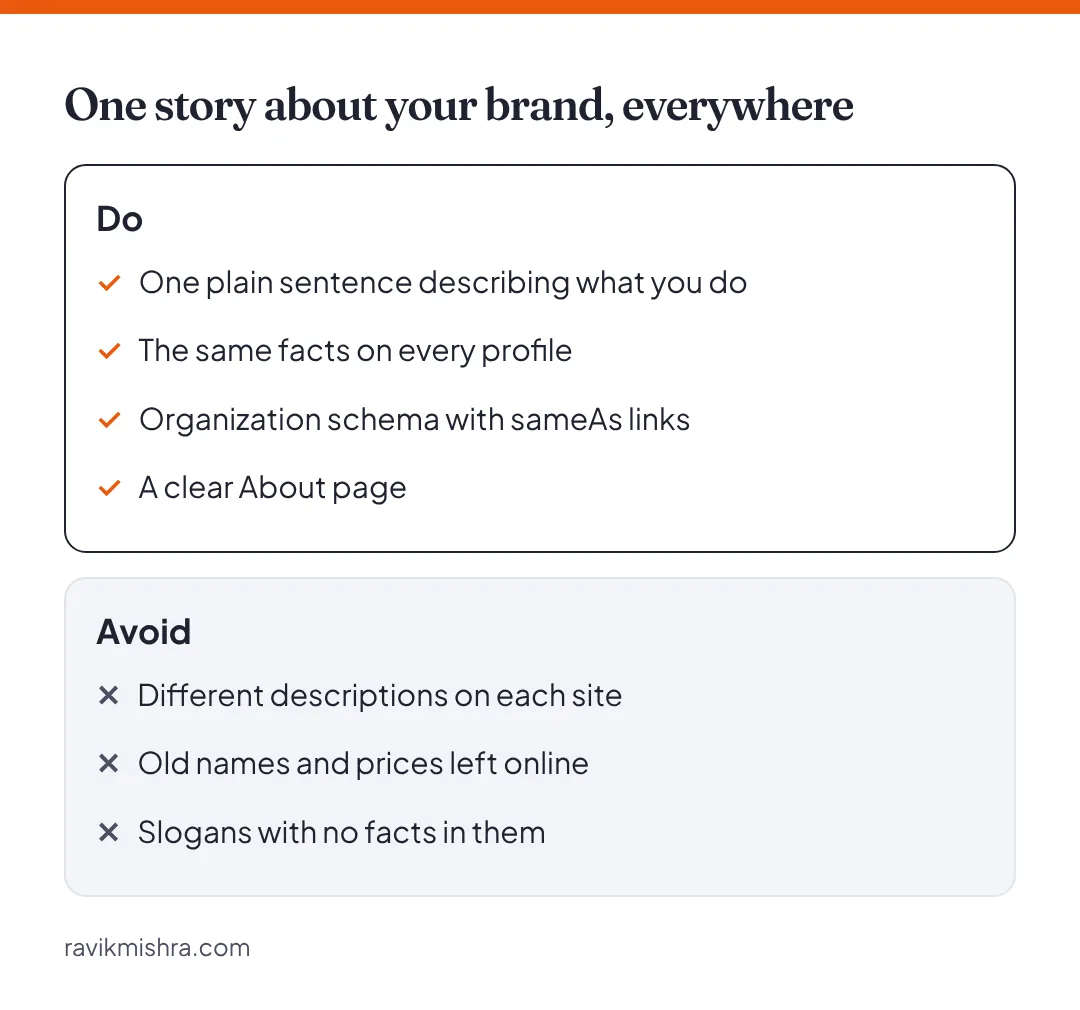
Write down the approved version of every basic fact: official name, a one-sentence description, category in the words buyers use, founding year, headquarters, leaders, main products, pricing model, and links to every official profile.
The one-sentence description matters most. Write it so a stranger could repeat it accurately. “Accounting software for small creative agencies in India” gets repeated. “Empowering teams to reimagine financial clarity” doesn’t, because it says nothing an engine can use.
Step 2: Fix your own site
- About page. Lead with the one-sentence description, then the plain facts. Put the brand story below that.
- Organization schema. Add it to your homepage or About page with name, URL, logo, description, foundingDate, address, and a
sameAslist of official profiles. - Author pages. Give real experts their own pages and connect articles to them with Person schema.
- Renames. If you changed names, say “formerly known as” once on the About page and update every other mention.
Step 3: Make the rest of the web match
Update, in this order: profiles you control (LinkedIn, Google Business Profile, Crunchbase, social bios, app stores), then directories and review sites, then partner and integration listings, then old press that still ranks. Use the same wording everywhere. Exact repetition is what you want here.
Step 4: Wikidata and Wikipedia, carefully
Both are heavily used reference sources, and both have strict rules. Only pursue Wikipedia if you genuinely meet its notability guidelines, and never write your own article. Wikidata has a lower bar but still needs neutral, referenced entries. If you don’t qualify yet, independent coverage is the route to qualifying later.
How to tell it’s working
Re-ask the brand questions every few weeks. Accuracy usually improves before anything else. Once assistants describe you correctly and consistently, your content and outreach work start to pay off much faster.
Frequently asked questions
What is an entity in SEO?
An entity is something search engines and AI systems can identify without ambiguity, such as a company, person, product or place, along with its facts.
Do I need a Wikipedia page to be recognised by AI assistants?
No. Consistent facts on your own site and profiles come first. Pursue Wikipedia only if you genuinely meet its notability guidelines.
How do I check how AI assistants see my brand?
Ask ChatGPT, Gemini and Perplexity “What is [your brand]?” and compare the answers with your approved facts.